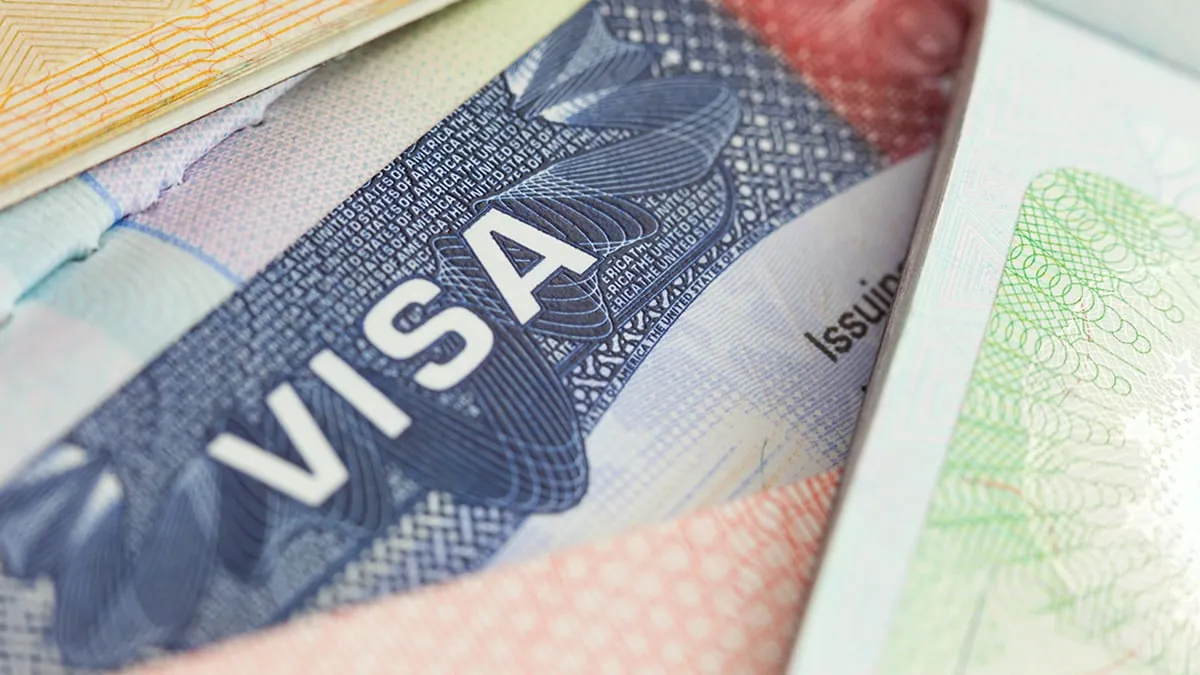
International pilots often ask us which U.S. visa to use for a short type rating or ATP course. For years, many experienced airline pilots came on a visitor visa. Today's rules are more specific, and a recent FAA change matters too. Here is the current picture, with sources.
This post is general information, not legal or immigration advice. We are a training center, not immigration advisers. The consular officer decides which visa you receive, so always confirm your own case with the U.S. Embassy or Consulate.
1. Training that leads to a certificate or rating needs a student visa
The State Department's Foreign Affairs Manual is direct. Under 9 FAM 402.5-5(J)(7), Aviation Training (current version dated April 22, 2024):
“All flight training for initial training or subsequent training that will result in a certificate or rating must be undertaken on an F or M visa. This includes FAA, EASA, and other equivalent certificates.”
Course length does not change this. The same chapter says study leading to a certificate is not permitted on a visitor (B) visa "even if it is for a short duration" (9 FAM 402.5-5(B)), and DHS rules say B-1 and B-2 visitors may not enroll in a course of study (8 CFR 214.2(b)(7)). So a new FAA type rating, or a new FAA ATP certificate, falls under the student-visa rule even if the course takes only a week or two.
2. The B-1 is for recurrent training
The same section allows a B-1 for "recurrent or refresher training (training related to an aircraft for which the applicant has already received certification)". The guidance assumes the employer pays for the training, and the pilot receives no U.S. salary and does no work in the United States. Recurrent training on a type you hold fits; a new type rating does not.
3. An M-1 visa starts with a Form I-20 from an SEVP-certified school
For vocational flight training, the student visa is normally the M-1. An M-1 requires a Form I-20 from a school certified by the Student and Exchange Visitor Program (SEVP), part of ICE. SEVP certifies flight training providers only for FAA Part 141 or Part 142 programs (ICE SEVP Broadcast Message 2509-03, September 22, 2025). Not every Part 141 or 142 provider is SEVP-certified; check the DHS "Study in the States" school search or ask the provider.
4. TSA approval is separate from your visa
Every non-U.S. citizen needs TSA Flight Training Security Program (FTSP) approval before simulator or aircraft training (49 CFR part 1552). A TSA Determination of Eligibility is not a visa, and a visa is not TSA approval: you need both. TSA is not an immigration authority, but its security threat assessment does include an immigration check. Under the FTSP final rule (effective July 30, 2024), an approval can generally cover multiple training events for up to five years. Our TSA Approval Guidance page walks through the steps.
5. Virtual academics need no visa
The ATP Certification Training Program (ATP CTP) includes 30 hours of academics. In our virtual classroom you complete those from home, wherever you live, so that part needs no U.S. visa and no TSA approval. The 10 hours of simulator training in the U.S. are a different matter.
6. The 2025 FAA rule: an ATP checkride in a jet simulator now includes the type rating
Many pilots have not heard about this one. The FAA's final rule Integration of Powered-Lift: Pilot Certification and Operations; Miscellaneous Amendments Related to Rotorcraft and Airplanes (89 FR 92296, published November 21, 2024, effective January 21, 2025) also clarified practical tests in aircraft that require a type rating:
- 14 CFR 61.43(g): an ATP practical test in a type-rated aircraft, or a simulator representing one, includes the same tasks and maneuvers as a type rating practical test.
- 14 CFR 61.39(a)(3)(ii) and 61.47(d): the applicant must meet the type rating requirements or already hold that type rating on their certificate.
In practice, an ATP checkride in an A320 or B737 simulator now comes with the type rating unless the type is already on your FAA certificate. A type rating on a foreign license does not count for this. So an ATP in a jet simulator usually means a new FAA type rating, which falls under the student-visa rule above.
Gray areas: be exact, never "tourism"
Not every case is clear-cut. For example, the ATP CTP ends with a graduation certificate from the training center, not an FAA certificate or rating, but it is a required step toward the ATP. When something is unclear, describe your training to the consular officer exactly as it is and let the officer decide. Never present flight training as tourism. Misstating your purpose can cause serious, lasting visa problems.
A simple planning checklist
- Write down exactly what you will earn: a new certificate, a new type rating, recurrent training, or a course completion certificate.
- Ask your training provider whether it is SEVP-certified and can issue a Form I-20 for that program, if you need one.
- Start your TSA application early. Many providers suggest allowing at least 60 days.
- Confirm your visa category with the U.S. Embassy or Consulate before you book travel.
Sources
- 9 FAM 402.5 (Students and Exchange Visitors), including 402.5-5(B) and 402.5-5(J)(7): https://fam.state.gov/fam/09FAM/09FAM040205.html
- 8 CFR 214.2(b)(7): https://www.ecfr.gov/current/title-8/chapter-I/subchapter-B/part-214/section-214.2
- ICE SEVP Broadcast Message 2509-03 (September 22, 2025): https://www.ice.gov/doclib/sevis/pdf/bcm250903.pdf
- DHS Study in the States school search: https://studyinthestates.dhs.gov/school-search
- TSA Flight Training Security Program: https://www.fts.tsa.dhs.gov/ and final rule, 89 FR 35592 (May 1, 2024): https://www.govinfo.gov/content/pkg/FR-2024-05-01/html/2024-08800.htm
- FAA final rule, 89 FR 92296 (November 21, 2024): https://www.federalregister.gov/documents/2024/11/21/2024-24886/integration-of-powered-lift-pilot-certification-and-operations-miscellaneous-amendments-related-to
- 14 CFR 61.47: https://www.ecfr.gov/current/title-14/chapter-I/subchapter-D/part-61/subpart-A/section-61.47
Questions?
Planning an ATP CTP, ATP or type rating in the U.S.? Send us your training question and tell us your licenses, ratings and type experience. We will walk you through the training side, and you can confirm the visa side with the U.S. Embassy or Consulate. For TSA steps, see our TSA Approval Guidance page.